

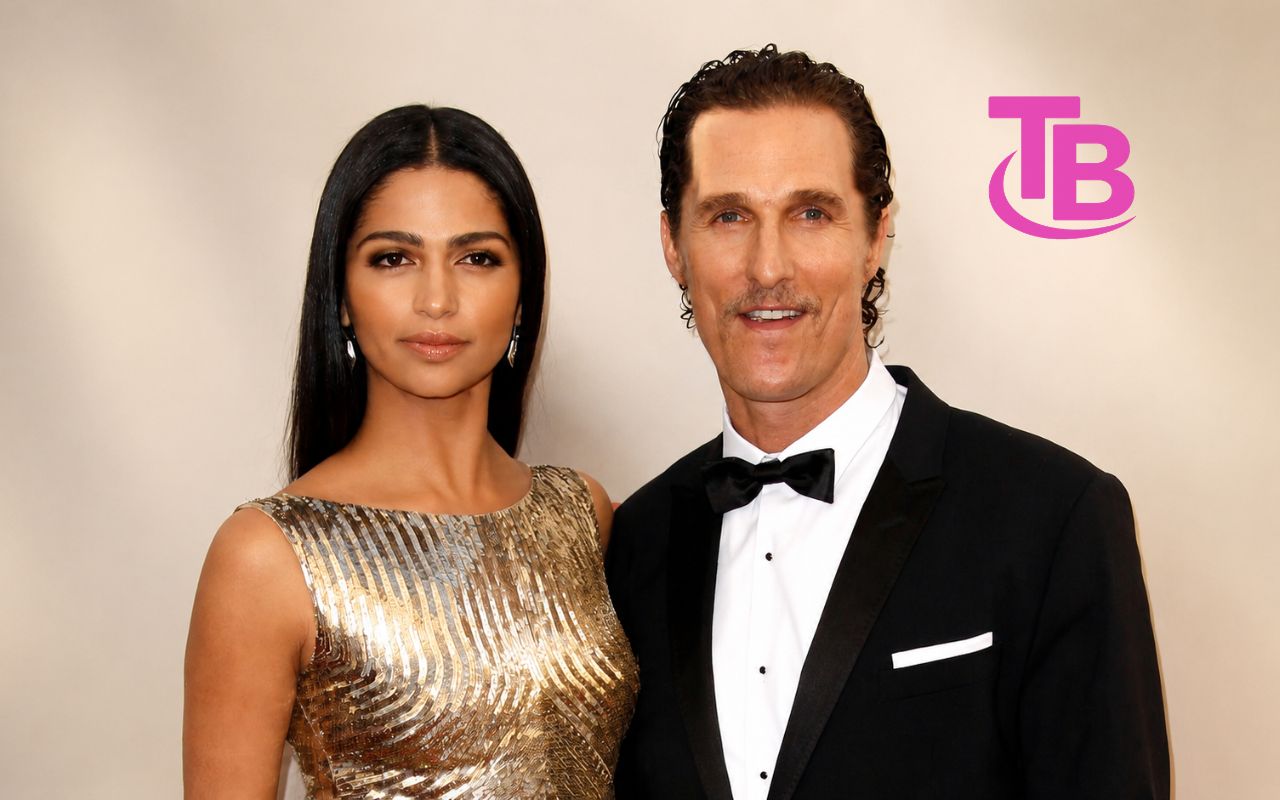
John Legend and Matthew McConaughey both stand as towering figures in the world of entertainment, each representing excellence in their respective fields of music and cinema. Their careers have unfolded over decades with remarkable achievements, deep personal evolution, and cultural influence well beyond their artistic output. Although they work in very different arenas—Legend as a gifted vocalist and songwriter, and McConaughey as a captivating actor—their lives share certain thematic threads: extraordinary talent nurtured from youth, steadfast commitment to craft, and a nuanced engagement with both popular culture and social discourse. This article explores their life stories, creative journeys, major accomplishments, personal backgrounds, and enduring legacies, weaving a complete portrait of two individuals whose contributions have shaped the cultural landscape of the 21st century.
The Early Years of John Legend: Music, Family, and Education
John Legend was born as John Roger Stephens on December 28, 1978, in Springfield, Ohio. From the outset, music was deeply woven into his daily life. His mother directed a church choir, his grandmother played the organ, and both his father and brother performed in the church band. These influences transformed music from a pastime into a central form of expression for Legend. Starting piano lessons at an early age and singing in choirs throughout childhood, he developed not only technical skill but an emotional understanding of music that would define his artistry. While his musical talent was evident, Legend’s intellect also shone; he was homeschooled early on, quickly advancing academically and ultimately enrolling at the University of Pennsylvania. There, he balanced rigorous academic work with music, graduating in 1999 with a Bachelor of Arts degree. Legend’s time at university was marked by a disciplined schedule of studies, performance, and artistic growth.
After college, despite his love of music, Legend took a very different route: he worked as a consultant for the Boston Consulting Group. This job placed him on a secure, traditional career path that many Ivy League graduates follow, yet it never quenched his deeper passion for music. Even while working long days, he spent evenings performing in nightclubs and recording his own material. These formative years of dedication and creative focus helped Legend refine his musical voice and prepared him for the breakthrough moment that arrived with his collaboration with producer Kanye West. This partnership ultimately led to a record deal and the release of his debut album, launching Legend onto the global stage.
Breakthrough and Artistic Evolution in John Legend’s Music Career
John Legend’s rise in the music industry was nothing short of meteoric once he began releasing records. His first major album, Get Lifted (2004), marked a powerful entrance into contemporary soul and R&B. With lush arrangements, gospel influences, and deeply personal lyrics, the album immediately connected with audiences. It produced the hit single “Ordinary People,” a song that became a definitive statement of emotional sincerity and vocal mastery. Get Lifted earned Legend eight nominations at the Grammy Awards and won three, including Best R&B Album and Best New Artist, firmly establishing his presence in the music world.
Legend’s success did not stop with his debut. He continued to explore musical depth and emotional nuance across multiple albums. Once Again (2006) demonstrated his growth as a songwriter and vocalist, earning him another Grammy for Best Male R&B Vocal Performance and expanding his sonic palette. With Evolver (2008), Legend embraced an even broader range of musical textures, weaving elements of pop, jazz, and soul into his work. The 2013 album Love in the Future marked a pinnacle in his commercial and artistic reach, notably through the global smash hit “All of Me,” a tender ballad written for his wife that topped charts around the world and became one of the most streamed and performed songs of the decade. As his discography grew with Darkness and Light (2016), Bigger Love (2020), and Legend (2022), Legend continued to push artistic boundaries while maintaining the emotional authenticity that defines his music. Across these records, his voice remained a source of warmth, depth, and unmistakable emotional resonance.
Awards, Honors, and the EGOT Achievement
One of the most remarkable aspects of John Legend’s career is his accumulated recognition across entertainment’s highest honors. While many artists excel in a single domain, Legend transcended traditional boundaries. His work has earned multiple Grammy Awards, but he has also been recognized in film, theatre, and television. A defining moment in his career came when he completed the rare EGOT—winning an Emmy, Grammy, Oscar, and Tony Award—a distinction that places him in an extraordinarily select group of entertainers.
Legend’s Oscar and Golden Globe came for Best Original Song with “Glory,” co‑written with Common for the film Selma, a song that fused powerful musicality with historical consciousness. His Tony Award, earned as a producer for the Broadway play Jitney, affirmed his prowess in theatrical production. And his Emmy Award, received as a producer on Jesus Christ Superstar Live in Concert, confirmed his excellence in television. By achieving EGOT status, Legend became the first African American man and one of the youngest artists in history to do so, further cementing his legacy as a truly multifaceted talent.
Beyond formal awards, Legend’s influence extends into cultural and social spheres. He has been an active voice in movements for education reform, criminal justice reform, and social equality. His advocacy work often intersects with his music, underscoring his belief that art and society are inseparable. This dimension of his career reflects not only artistic ambition but deep personal commitment to shaping a more equitable cultural conversation.
John Legend’s Personal Life and Public Influence
John Legend’s public presence extends beyond music into television, mentorship, and public discourse. One of his notable roles has been as a coach on the long‑running singing competition The Voice, where he has helped nurture and guide emerging artists. His presence on television, like his music, is characterized by empathy, insight, and genuine connection with people.
Legend’s personal life has also been part of his public story. He married model and television personality Chrissy Teigen in 2013, and together they have built a family that is often in the public eye with warmth, humor, and transparency. Their relationship and family life have become part of Legend’s broader narrative, illustrating how his personal experiences inform and enrich his artistic output.
The Early Life of Matthew McConaughey: Texas Roots and Education
Matthew David McConaughey was born on November 4, 1969, in Uvalde, Texas, and raised in Longview as the youngest of three sons. Growing up in a working‑class family, McConaughey was shaped by the strong values and cultural identity rooted in his Texan upbringing. His father worked in the oil pipeline business, and his mother taught school, instilling in him a grounded sense of ambition and self‑reliance. Although McConaughey initially planned to study law when he enrolled at the University of Texas at Austin, his path shifted dramatically toward the arts as his interest in communication, storytelling, and performance grew. He ultimately earned a Bachelor of Science degree in radio‑television‑film in 1993, preparing him for a life in front of, not behind, the camera.
Entering Hollywood: Early Roles and Rising Stardom
McConaughey’s early career began with television commercials and small film parts, but it was his role in Richard Linklater’s Dazed and Confused (1993) that marked his breakout. Playing the character David Wooderson, McConaughey brought an effortless blend of charisma, humor, and presence to the screen. Originally intended as a minor role, Wooderson grew in importance thanks to McConaughey’s compelling performance. This early success showcased his natural screen presence and hinted at the wide range of roles he would take on throughout his career.
In the mid‑1990s, McConaughey began to anchor himself in more substantial dramatic roles. In A Time to Kill (1996), he portrayed a lawyer defending a Black man in a racially charged case, demonstrating his ability to handle serious, emotionally complex material. Further roles in Contact (1997) and Steven Spielberg’s Amistad (1997) solidified his growing reputation as a versatile actor capable of meeting Hollywood’s widest demands.
Romantic Comedies and Box Office Appeal
The early 2000s marked a period of immense commercial success for McConaughey, particularly in romantic comedies. Films such as The Wedding Planner (2001), How to Lose a Guy in 10 Days (2003), Failure to Launch (2006), Fool’s Gold (2008), and Ghosts of Girlfriends Past (2009) showcased his easy charm and comedic timing, making him one of the most recognizable faces in mainstream cinema. His portrayal of likable, confident leading men endeared him to audiences worldwide and made him a consistent box office draw.
During this era, McConaughey also appeared in films outside the romantic comedy genre, such as action‑adventure movies and ensemble pieces that demonstrated his commitment to versatility. His range of performances during this time helped establish him as a major Hollywood star, while his broad appeal made him a fixture of popular culture. In 2005, he was named People magazine’s “Sexiest Man Alive,” a title that reflected his wide‑ranging appeal and charisma.
The “McConaissance” and Transformational Acting
As McConaughey’s career progressed into the 2010s, he intentionally shifted toward more complex, serious, and challenging roles—a period often referred to in the entertainment world as the “McConaissance.” This phase of his career was marked by a deliberate choice to take on roles that revealed a deeper emotional and psychological range. In The Lincoln Lawyer (2011), he played a defense attorney who conducts his practice from the back of his car, showcasing his ability to inhabit morally nuanced characters. In Mud (2012), he portrayed a mysterious drifter central to a coming‑of‑age drama that further emphasized his dramatic capabilities.
None of these roles, however, epitomized his transformation more than his performance in Dallas Buyers Club (2013). In this biographical drama, McConaughey embodied Ron Woodroof, a heterosexual man diagnosed with AIDS who fought for access to life‑saving treatments in the face of institutional resistance. For the role, McConaughey underwent a dramatic physical transformation, losing a significant amount of weight to authentically portray the character’s struggle. His performance was widely praised for its depth, courage, and emotional honesty, earning him the Academy Award for Best Actor, as well as a Golden Globe, Screen Actors Guild Award, and other honors. This achievement confirmed McConaughey’s evolution from “leading man” to one of Hollywood’s most respected dramatic actors.
Ongoing Career and Continued Influence
After Dallas Buyers Club, McConaughey continued to explore a wide range of film projects that highlighted his breadth as an actor. In Interstellar (2014), he took on the role of a space pilot searching for a new home for humanity—a performance that combined physical rigor with existential depth. He also appeared in historical dramas such as Free State of Jones (2016) and lent his voice to animated films like Kubo and the Two Strings (2016) and Sing (2016), further demonstrating his versatility. His work in television, including critically acclaimed performances in series such as True Detective, reinforced his ability to excel across creative formats.
Off the screen, McConaughey’s life continued to draw public interest. He married model and designer Camila Alves McConaughey in 2012, and together they have three children. His public persona blends his Texan authenticity with philosophical reflections on life, identity, and personal growth—qualities that he articulated in his memoir Greenlights, a bestseller that offered candid insights into his personal journey and worldview. His cultural presence extends beyond acting into business ventures, including a leadership role with Austin FC, a Major League Soccer team, where he embraced a unique title emphasizing culture and community engagement.
A Unified Legacy
John Legend and Matthew McConaughey reflect the enduring power of artistic evolution. Legend’s mastery of music—coupled with his activism, television work, and EGOT achievement—reveals an artist whose influence extends far beyond the stage. McConaughey’s journey from lovable romantic lead to award‑winning dramatic actor illustrates the power of reinvention and commitment to craft. While their fields differ, both men share an unwavering devotion to excellence and a deep engagement with culture, identity, and creative expression. Their stories remind us that true artistic impact comes not only from talent but from the courage to evolve, challenge oneself, and connect authentically with audiences across generations.
