

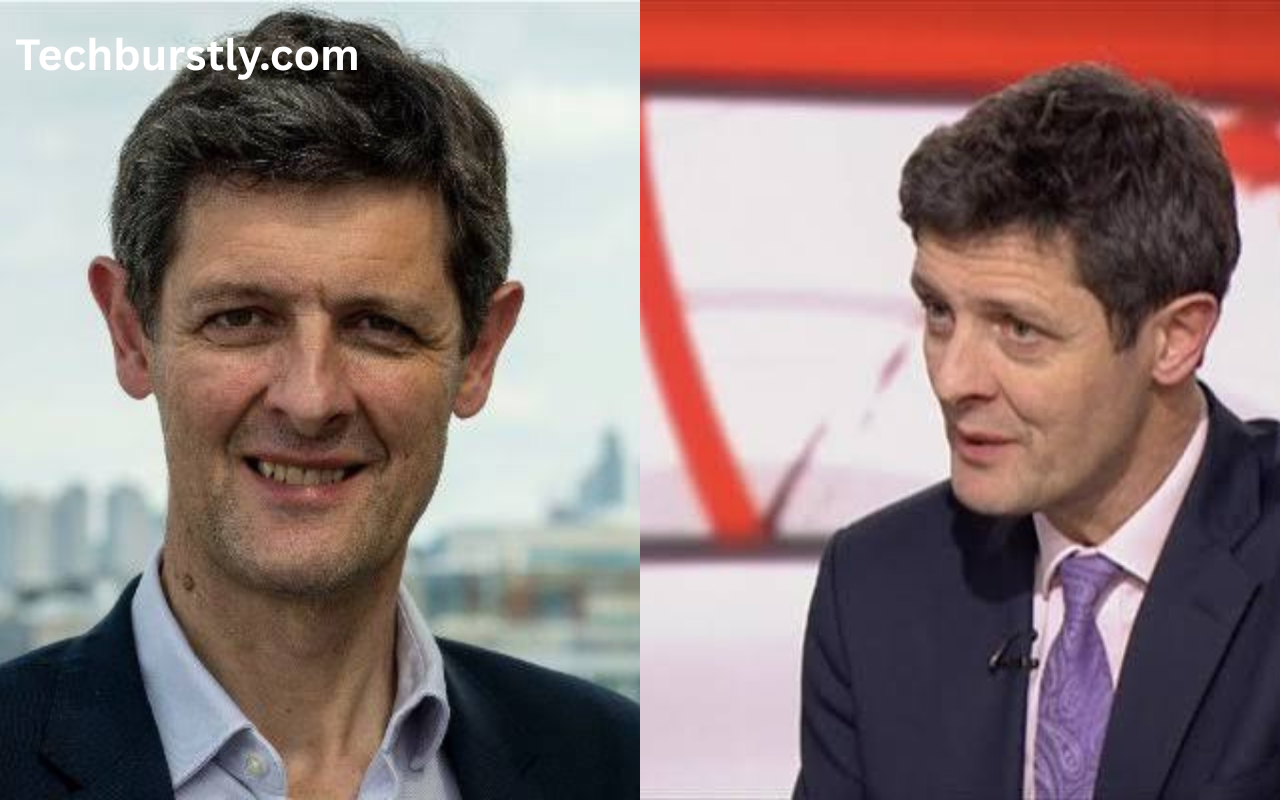
Introduction
Few British journalists have earned the level of public trust that Hugh Pym has built over the course of his distinguished broadcasting career. Best known as the Health Editor for BBC News, Pym has spent decades explaining some of the most complex issues affecting the United Kingdom, from financial crises and government policy to the COVID-19 pandemic and the challenges facing the National Health Service (NHS). His ability to turn complicated subjects into clear, accessible reporting has made him one of Britain’s most respected television journalists and health correspondents. Throughout his career, he has remained committed to accuracy, impartiality, and public service, earning widespread recognition from viewers and fellow journalists alike.
Table of Contents
Toggle| Quick Facts | Details |
|---|---|
| Full Name | Hugh Ruthven Pym |
| Known As | Hugh Pym |
| Date of Birth | 18 October 1959 |
| Age | 66 (as of 2026) |
| Birthplace | Malmesbury, Wiltshire, England |
| Nationality | British |
| Profession | Journalist, Author, Broadcaster |
| Current Position | Health Editor, BBC News |
| Education | Marlborough College; Christ Church, Oxford (PPE); Broadcast Journalism at Falmouth |
| Parents | Father was a General Practitioner (GP); mother’s family is connected to the Clark shoe business |
| Siblings | Brother (doctor) |
| Marital Status | Married |
| Spouse | Susan Neill |
| Children | Three |
| Estimated Net Worth | Estimated between $2–5 million (public estimate, not officially confirmed) |
| No verified public account | |
| X (Twitter) | Formerly active on X (@BBCHughPym) |
| No verified public profile |
Hugh Pym Biography
Hugh Pym has become one of the most recognizable faces in British journalism through years of calm, factual, and balanced reporting. While many viewers know him as the BBC’s Health Editor, his professional journey began in financial and political journalism long before he became associated with healthcare reporting. His career demonstrates remarkable versatility, allowing him to explain everything from economic recessions to medical breakthroughs with equal confidence. Over the years, audiences have come to rely on his thoughtful reporting during moments of uncertainty and national importance.
Unlike many television personalities who rely on dramatic presentation, Hugh Pym has built his reputation through careful research and measured analysis. His reporting style focuses on evidence rather than speculation, making him a trusted voice during significant national events. Whether discussing NHS reforms, government spending, or public health emergencies, he consistently provides context that helps viewers understand how major developments affect everyday lives.
His career also reflects the changing nature of journalism. Beginning in local radio before progressing through national television, Pym has witnessed enormous changes in the media landscape. Despite advances in technology and digital news, he continues to believe that the core principles of journalism—accuracy, fairness, and clarity—remain just as important today as when he first entered the profession.
Early Life and Family Background
Hugh Ruthven Pym was born on 18 October 1959 in Malmesbury, Wiltshire, England, into a family with a long history of public service, education, medicine, and community leadership. Growing up in an intellectually stimulating environment, he developed a natural curiosity about current affairs and the world around him. His father worked as a general practitioner (GP), giving Hugh an early understanding of healthcare and the importance of public service, while his mother’s family was connected to the well-known Clarks shoe company. These family influences helped shape the values that would later define his journalism career—accuracy, responsibility, and compassion.
The Pym family also has an interesting historical background. Hugh is the great-grandson of Walter Pym, who served as a bishop, while his great-uncle Leslie Ruthven Pym was a Member of Parliament. Another close relative, Francis Pym, became one of Britain’s most prominent Conservative politicians and served as Foreign Secretary during the 1980s. Although Hugh chose journalism rather than politics, growing up in a family where public affairs were regularly discussed gave him a deeper appreciation for government, economics, and national decision-making. Rather than following his relatives into political office, he decided that informing the public through journalism was his own way of serving society.
His childhood was also influenced by medicine. Along with having a father who worked as a doctor, Hugh’s brother entered the medical profession as well. This family connection to healthcare would later become especially valuable when he was appointed BBC Health Editor. His understanding of medical issues, combined with years of experience covering economics and politics, enabled him to explain NHS funding, healthcare reforms, and public health policies with unusual depth and clarity. This blend of personal experience and professional expertise has become one of the defining characteristics of his reporting.
Education and Academic Journey
Hugh Pym received his early education at Marlborough College, one of England’s best-known independent schools. During his school years, he developed strong analytical skills and a growing interest in history, politics, and economics. Teachers recognized his thoughtful approach to learning and encouraged him to explore subjects that required critical thinking. While journalism was not yet his immediate career goal, the foundation he built during these years prepared him well for the demanding profession he would later enter.
After completing school, he attended Christ Church, Oxford, where he studied Philosophy, Politics and Economics (PPE)—one of Britain’s most prestigious degree programs. PPE has produced numerous politicians, economists, business leaders, and journalists because it combines analytical reasoning with an understanding of society and public policy. Hugh graduated with a Bachelor of Arts degree in 1981, gaining the broad academic knowledge that would later allow him to report confidently on economics, finance, politics, and healthcare.
Although Oxford gave him an excellent education, Hugh has openly admitted that he did not become heavily involved in student journalism, something he later viewed as a missed opportunity. Determined to pursue broadcasting, he enrolled in a postgraduate Broadcast Journalism course at Falmouth College (now Falmouth University). There he gained practical radio training and valuable work placements that opened the door to his first professional journalism jobs. Looking back, Pym often encourages aspiring journalists to gain as much hands-on reporting experience as possible while studying, as practical skills are just as important as academic qualifications.
Starting a Career in Journalism
Like many successful journalists, Hugh Pym did not immediately enter national television. His first professional experience came in local radio, where he learned the essentials of reporting, interviewing, writing scripts, and meeting tight deadlines. Working for local stations taught him how to identify stories that mattered to ordinary people and explain them clearly. These early years provided invaluable experience and helped build the confidence needed for larger broadcasting roles.
He later worked with BBC Radio before moving to Channel 4, where he produced the business programme Business Daily. This role introduced him to economic reporting and strengthened his understanding of financial markets, business policy, and corporate affairs. It also marked the beginning of his specialization in economics, an area that would define much of the next stage of his career. His ability to simplify complicated financial topics quickly earned the respect of colleagues and industry professionals.
The next major step came when he joined ITN, where he spent approximately a decade covering politics, business, and economics. Later, he also worked with Sky News before returning to the BBC in 2001. By this stage, Hugh had established himself as one of Britain’s most knowledgeable economics correspondents. His reporting during periods of economic uncertainty demonstrated not only technical expertise but also an ability to explain how national financial decisions affected ordinary families and businesses across the United Kingdom.
BBC Career and Rise as a Leading Health Journalist
Hugh Pym’s return to the BBC in 2001 marked the beginning of the most influential period of his career. Initially, he worked as a Special Correspondent covering economics and major financial developments affecting the United Kingdom. His deep understanding of economic policy, banking, and government spending quickly made him one of the BBC’s leading financial journalists. During the late 2000s, he played a central role in explaining the global financial crisis to millions of viewers, helping the public understand complicated subjects such as bank failures, recession, government bailouts, and economic recovery. His calm and analytical reporting style earned praise from audiences who valued clear explanations during uncertain times.
Between 2008 and 2014, Pym became one of the BBC’s most trusted economics correspondents. He served as Acting Economics Editor during Stephanie Flanders’ maternity leave before becoming the BBC’s Chief Economics Correspondent. Throughout this period, he reported extensively on the collapse of Lehman Brothers, Britain’s banking rescue packages, government spending reviews, and the long economic recovery that followed the financial crash. His ability to translate highly technical financial information into understandable language helped establish him as one of Britain’s most respected broadcast journalists.
A major turning point arrived in March 2014, when Hugh Pym was appointed Health Editor for BBC News. The move surprised some observers because he was already highly regarded for economic reporting, but it soon became clear that his analytical skills were equally valuable in healthcare journalism. His background in economics allowed him to explain NHS funding, healthcare budgets, public policy, and medical services from both financial and clinical perspectives. Since taking on the role, he has become one of the BBC’s leading experts on health policy, medical innovation, public health, and social care.
Reporting During the COVID-19 Pandemic
The defining chapter of Hugh Pym’s career came during the COVID-19 pandemic, when millions of people relied on BBC News for trustworthy health information. From the earliest reports of coronavirus cases in the United Kingdom through nationwide lockdowns, vaccination campaigns, and the gradual reopening of society, Pym appeared regularly on television explaining rapidly changing scientific advice and government decisions. His reporting focused on verified medical evidence rather than speculation, helping viewers understand the risks, restrictions, and progress made by healthcare professionals.
Throughout the pandemic, Pym interviewed doctors, scientists, NHS leaders, researchers, ministers, and frontline healthcare workers. He covered a wide range of topics, including vaccine development, intensive care pressures, PPE shortages, testing programmes, and the long-term impact of COVID-19 on patients and the health service. His balanced reporting reflected the BBC’s commitment to impartial journalism while providing practical information that audiences could trust during an unprecedented global crisis. Many viewers came to associate his calm delivery with reliability during one of the most challenging periods in modern British history.
His outstanding work during the pandemic received national recognition. In 2020, Hugh Pym was awarded the British Journalism Review Charles Wheeler Award, honouring his contribution to public understanding during the COVID-19 emergency. Pym has consistently emphasized that the recognition belonged not only to him but also to the wider BBC News team, highlighting the collaborative nature of broadcast journalism. The award reinforced his reputation as one of Britain’s most trusted health correspondents and demonstrated the important role responsible journalism plays during times of crisis.
Books, Publications, and Professional Contributions
Alongside his broadcasting career, Hugh Pym has built a respected reputation as an author. His books reflect his expertise in economics, politics, and public affairs, offering readers detailed insights into some of Britain’s most significant financial events. Rather than writing sensational accounts, his publications focus on careful research, balanced analysis, and accessible explanations for general readers interested in economics and government policy.
Among his best-known works is Inside the Banking Crisis, published in 2014. The book examines the global financial crisis and Britain’s response to one of the most serious economic emergencies in modern history. Drawing on his years of reporting, Pym explains how political leaders, financial institutions, regulators, and central banks attempted to prevent the collapse of the banking system. The book remains an important resource for readers seeking to understand the events that reshaped the global economy. Earlier in his career, he also co-authored What Happened? And Other Questions About the Credit Crunch and Gordon Brown: The First Year in Power, further demonstrating his expertise in political and economic journalism.
Even beyond his books, Pym regularly contributes in-depth reporting, documentaries, interviews, and special investigations for BBC News. His recent work has explored subjects such as NHS waiting lists, cancer treatment, mental health services, staffing shortages, ageing, gut health, and healthcare reform. By combining on-the-ground reporting with interviews involving medical professionals, policymakers, and patients, he continues to provide journalism that informs public debate while remaining accurate, balanced, and evidence-based.cv
Personal Life, Family, and Interests
Despite being one of the BBC’s most recognizable journalists, Hugh Pym has always maintained a private and balanced personal life. He is married to Susan Neill, who is originally from Dumbarton, Scotland, and together they have three children—two sons and one daughter. Unlike many media personalities, Pym rarely discusses his family in interviews or on social media, preferring to keep his professional and personal lives separate. His commitment to privacy has helped him maintain a stable family life while working in the demanding world of broadcast journalism.
Faith also plays an important role in Hugh Pym’s life. He serves as an Elder in the Church of Scotland, reflecting his long-standing commitment to community service and ethical values. Friends and colleagues have described him as thoughtful, calm, and approachable, qualities that are reflected in both his journalism and his personal relationships. His measured approach to reporting is often credited to the values of honesty, integrity, and responsibility that have guided him throughout his life.
Away from television studios and newsrooms, Pym enjoys following Scottish rugby and spending time with his family. Although his schedule often involves covering major national events and breaking news, he values maintaining a healthy work-life balance whenever possible. These interests help him stay grounded despite the pressures of reporting on some of the most significant political, economic, and public health stories in the United Kingdom.
Net Worth and Sources of Income
After more than four decades in journalism, Hugh Pym has built a successful and respected career. While the BBC does not publicly disclose individual salaries for every presenter and editor, industry estimates place his net worth between approximately $2 million and $5 million. These figures remain estimates rather than officially confirmed financial disclosures, but they reflect his long-standing position as one of the BBC’s senior journalists and authors.
The majority of Pym’s income comes from his work with BBC News, where he serves as Health Editor. Over the years, he has also earned income through book publishing, public speaking engagements, conference appearances, and contributions to documentaries and special television programmes. His books on economics and banking continue to be valued resources for readers interested in British financial history.
Unlike many public figures, Hugh Pym has never been known for commercial endorsements or celebrity branding. Instead, his professional reputation has been built on journalistic credibility rather than commercial promotion. His financial success is therefore closely linked to decades of consistent reporting, editorial leadership, and public trust.
Main sources of income include:
- BBC News salary.
- Book royalties and publishing.
- Broadcasting and documentary work.
- Speaking engagements and journalism events.
Social Media Presence and Public Engagement
Hugh Pym maintains a relatively modest social media presence compared with many modern broadcasters. Rather than using social platforms for personal updates, he has primarily used them to share breaking news, BBC reports, and important public health information. His online communication reflects the same professional standards that viewers see in his television reporting—clear, factual, and focused on informing the public rather than attracting attention.
During the COVID-19 pandemic, his posts helped direct audiences toward verified information and official announcements. One of his most widely shared posts came in December 2020 when he reported that the second person to receive the Pfizer-BioNTech COVID-19 vaccine in the UK was named William Shakespeare, a coincidence that quickly went viral around the world. The moment highlighted how factual reporting can sometimes capture unexpected public interest.
Although he does not actively cultivate the kind of celebrity following seen among entertainers or influencers, Hugh Pym continues to engage with audiences through BBC broadcasts, interviews, public events, and trusted news coverage. His reputation is built on credibility rather than popularity, making him one of Britain’s most respected broadcast journalists.
Recent Career Updates and Future Outlook
In recent years, Hugh Pym has continued to play a central role in the BBC’s coverage of the UK’s healthcare system. His reporting has focused on issues such as NHS waiting lists, staffing shortages, cancer services, mental health care, healthcare funding, ageing populations, and medical innovation. As healthcare remains one of the most important public policy issues in Britain, his expertise continues to be in high demand across BBC television, radio, and digital platforms.
Beyond daily news reporting, Pym remains involved in producing in-depth features and interviews that examine the long-term challenges facing modern healthcare. His ability to combine economic knowledge with health reporting gives audiences a broader understanding of how policy decisions affect hospitals, healthcare professionals, and patients throughout the United Kingdom.
Looking ahead, Hugh Pym is expected to remain one of the BBC’s leading specialist correspondents. With decades of experience covering politics, economics, and healthcare, he continues to mentor younger journalists while maintaining the high editorial standards that have defined his own career. His future work is likely to focus on the continuing transformation of healthcare, advances in medical research, and the evolving relationship between public policy and patient care.
Conclusion
Hugh Pym’s career is an outstanding example of how knowledge, integrity, and dedication can create a lasting impact in journalism. From his beginnings in local radio to becoming the respected Health Editor of BBC News, he has consistently demonstrated that careful research and balanced reporting remain essential qualities in modern media. His work covering financial crises, government policy, and the COVID-19 pandemic has informed millions of people and strengthened public understanding of some of the most complex issues facing society.
Throughout more than forty years in broadcasting, Pym has earned the trust of audiences by placing facts above opinion and public service above personal recognition. His books, television reports, interviews, and investigative journalism continue to educate viewers while contributing meaningfully to national conversations about healthcare, economics, and public policy. His professionalism has made him a respected figure not only within the BBC but across the wider journalism industry.
As Hugh Pym continues to inform audiences through thoughtful, reliable, and evidence-based journalism, his story serves as a powerful reminder that perseverance, integrity, and a commitment to truth can build an enduring legacy. His journey inspires aspiring journalists to value accuracy, curiosity, and public service, proving that meaningful reporting has the power to educate, reassure, and positively influence society for generations to come.
